
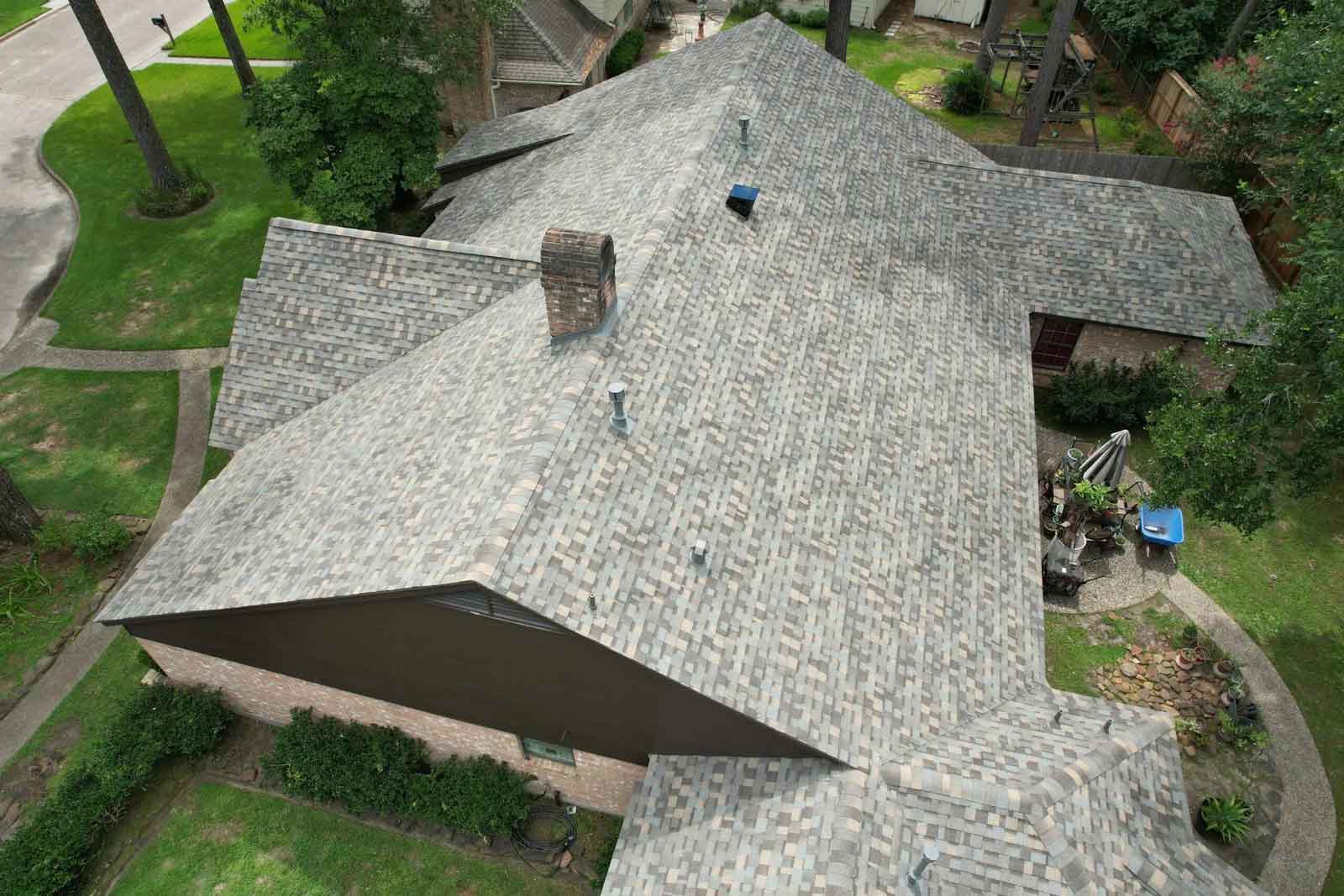
A roof rarely fails all at once. It gives you signs first. The trick is knowing which signs mean a simple repair and which mean it is time for a new roof. In Houston, where heat, heavy rain, and the odd hailstorm all take a toll, roofs often wear out faster than the label on the shingles suggests. Here are seven signs your roof may be near the end, and what each one means for you.
1. Your Roof Is Getting Old
Most asphalt shingle roofs last around 15 to 25 years, and Houston heat can push that toward the shorter end. If your roof is past 15 years and showing wear, age alone is a reason to have it checked. A roof near the end of its life is more likely to fail in the next big storm, and insurers look harder at older roofs. If you do not know your roof’s age, a free inspection can give you a good estimate.
2. Shingles Are Curling, Cracking, or Missing
Look at your shingles from the ground. Are the edges curling up or cupping? Are shingles cracked, or missing in patches? Curling and cracking mean the shingles have dried out and lost their seal, which lets water in. A few missing shingles can be replaced. But when curling and cracking show up across the whole roof, it is a sign the surface is worn out, not just damaged in one spot.
3. Granules Are Filling Your Gutters
Asphalt shingles are coated with fine granules that protect them from the sun. As shingles age, they shed these granules. If you see piles of what looks like coarse black sand in your gutters or at the base of your downspouts, your shingles are wearing thin. Heavy granule loss means the shingles are near the end and no longer protecting the mat underneath.
4. You See Daylight or Stains in the Attic
Go into your attic on a bright day. If you see daylight coming through the roof boards, water has a way in too. Look for dark stains on the wood, a damp or musty smell, or wet insulation. These point to an active leak. One small leak can often be repaired. But widespread staining and soft, damp decking usually mean the roof has been letting water in for a while, and a new roof is the safer fix.
5. Your Roof Is Sagging
A roofline should be straight. If you see a dip or a sag, especially between the rafters, that is a serious sign. It usually means the decking underneath has absorbed water and weakened. A sagging roof is not a repair-it-later problem. Get it inspected soon, because it can point to structural damage that only gets worse and more costly the longer it waits.
6. You Keep Paying for Repairs
One repair is normal. But if you are calling a roofer every storm season for another leak or another patch, the repairs are adding up to more than a new roof would cost. At some point, a roof that keeps failing in new spots is telling you it is worn out. Add up what you have spent over the last few years. If it is climbing, replacement is often the better value.
7. A Storm Did Real Damage
Houston sits in a part of Texas that leads the nation in hail events, and big storms like the May 16, 2024 derecho and Hurricane Beryl have hit the area hard. Wind can strip shingles and break their seals. Hail can bruise the mat so it fails months later. After a major storm, get the roof inspected, even if it looks fine from the ground. If the damage is widespread, a full replacement, often with insurance help, may be the right move.
Repair or Replace: How to Decide
So how do you tell the difference? As a rule, isolated damage in one area points to a repair. Widespread wear, an aging roof, and problems in several spots point to replacement. The honest way to know is to get the roof inspected by someone who will tell you the truth either way. A good roofer will repair when a repair makes sense and only recommend replacement when the roof really needs it.
At STX Roofing, our inspections are free, and we give you a straight answer. We are veteran-owned and based in Huffman, and we have served the Lake Houston area since 2016. Our owner, Russell Mullin, worked as an insurance adjuster, so if storm damage is involved, he can explain how a claim is likely to be judged. Whether you need a repair or a new roof, we back our residential work with a lifetime labor warranty.
Do Not Wait for a Leak
Here is the mistake we see most. A homeowner spots one sign and waits. They wait for a leak to prove it.
By then the damage has spread. A small problem is cheap to fix. A soaked deck is not.
Water travels once it gets in. It rots wood. It grows mold. It ruins insulation.
Catch it early and you keep your options open. Wait too long and the choice is made for you. A quick inspection is the easy first step. It costs nothing and tells you exactly where you stand.
What to Do Next
If two or more of these signs sound familiar, do not wait for a leak to force the decision. Book a free roof inspection and get a clear read on where your roof stands. Call STX Roofing at (281) 601-7663, and we will check your roof, show you photos of what we find, and help you choose the right next step. For more on how roofing professionals judge roof condition, the National Roofing Contractors Association is a helpful, independent resource.
Related pages: Residential Roof Replacement, Roof Repair, Free Roof Inspection, and Storm Damage Roof Repair