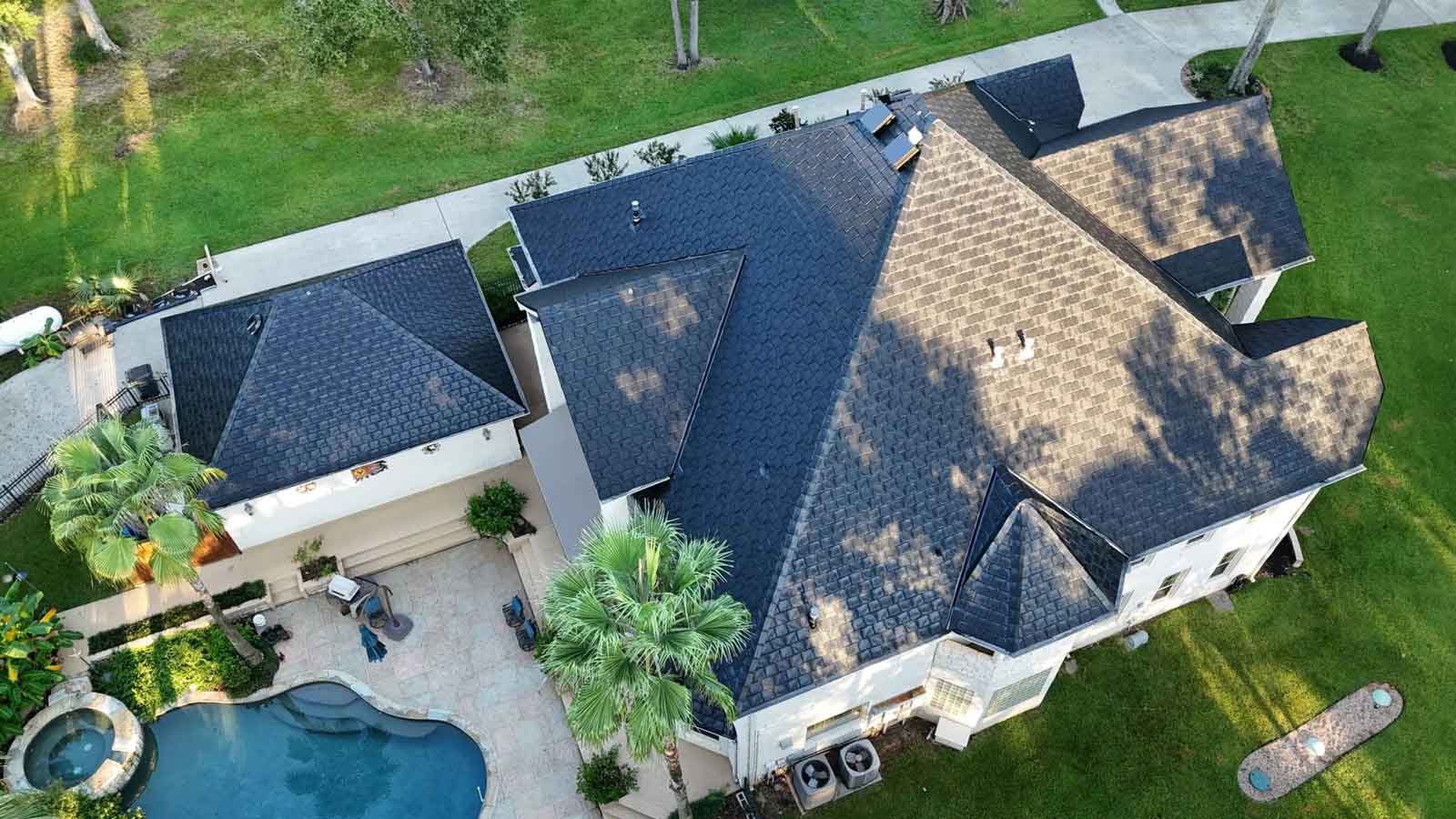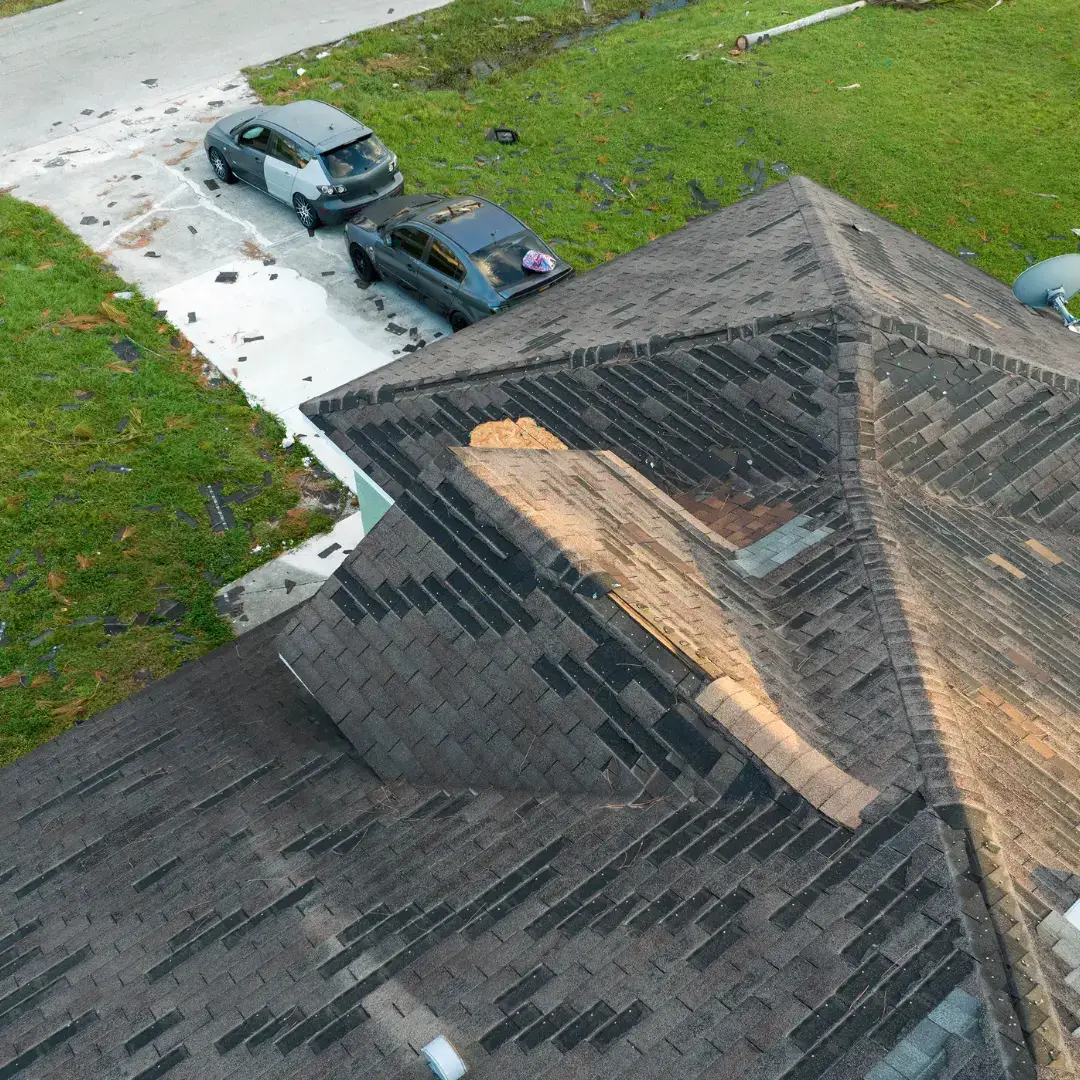
Nobody sees the underlayment once the shingles go on. But it’s the layer that keeps water out when shingles blow off. So the synthetic underlayment vs felt question matters more than most people think, especially in Houston.
At STX Roofing, we usually recommend synthetic under Houston roofs. Here’s why, where felt still shows up, and what to ask your roofer before you sign.
What Roof Underlayment Does
Underlayment sits between the roof deck and the shingles. It sheds any water that gets past the shingles, and it protects the deck during installation. If a storm strips shingles off, it’s your backup until repairs happen.
Building codes require it. The International Residential Code lists approved types and requires each roll to carry a label showing the standard it meets.
What Felt Underlayment Is
Felt is the traditional option. It’s a paper or fiberglass mat soaked in asphalt. You’ll hear it called tar paper or by its weight, like 15-pound or 30-pound felt. It’s made to standards called ASTM D226 and ASTM D4869.
Felt has been used for generations, and it costs less than most synthetics. InterNACHI puts the life expectancy of felt paper at 15 to 30 years.
It has some weak spots. Felt can tear when crews walk on it. It can wrinkle when it gets wet, and those wrinkles can show through the shingles. It’s also heavy, so rolls cover less area.
What Synthetic Underlayment Is
Synthetic underlayment is a woven or layered plastic sheet, usually polypropylene or polyethylene. Newer synthetics are tested to a standard called ASTM D8257. Many products also carry evaluation reports showing they can be used in place of felt. An ICC Evaluation Service report is one example, covering synthetics as an alternative to ASTM D226 felt.
Synthetics resist tearing and don’t soak up water the way felt does. They’re lighter, so rolls are bigger and crews make fewer seams. Fewer seams means fewer places for wind-driven rain to find a way in. Many synthetics also have a textured surface that gives crews better footing on a steep roof.
Synthetic Underlayment vs Felt in Houston
Heat. Our long summers are hard on asphalt products. Synthetics hold up better to the heat during installation and over time.
Pop-up storms. Houston afternoons can turn stormy fast. If rain hits after tear-off, a synthetic layer that stays flat and intact gives the deck better protection until shingles go on. Felt that gets soaked can wrinkle and need replacing.
Foot traffic. Crews walk all over the underlayment before shingles are down. Synthetics are less likely to rip under boots.
Cost. Felt is cheaper. Ask your roofer to show the difference in writing so you can weigh it.
Exposure time. Each synthetic has its own limit for how long it can be left uncovered. That number comes from the manufacturer, so ask what it is for the product on your roof.
Where Self-Adhering Membrane Fits
There’s a third type. Self-adhering membrane is a sticky, rubbery sheet that seals around nails. It’s made to ASTM D1970. We use it where water is most likely to get in, like valleys and around chimneys, vents, and skylights.
Most good roofs use more than one type. Synthetic covers the open field of the roof, and membrane protects the trouble spots.
Does Underlayment Affect Your Warranty?
It can. Shingle makers like GAF and CertainTeed offer their best warranties only on full systems. That usually means their own underlayment, starter, and ridge cap, along with the shingles. If you want enhanced coverage, the underlayment choice is part of the deal.
For more on what goes under your shingles, see our page on roof decking and underlayment replacement. If you’re still choosing materials, our post on what to consider when choosing roofing material is a good next read.
When Felt Still Makes Sense
Felt isn’t wrong. It meets code, it’s cheap, and plenty of older roofs have done fine with it. It can make sense on a small repair where the rest of the roof already has felt. It’s also an option when budget is the deciding factor and the roof will be covered quickly.
What matters most is how it’s installed. Laps, nailing, and how it ties into the drip edge and flashing make a bigger difference than the label. A well-installed felt layer beats a sloppy synthetic one.
Questions to Ask Your Roofer
- Which underlayment are you using, and which standard does it meet?
- Where will you use self-adhering membrane?
- Does the underlayment match the shingle system for warranty purposes?
- Will you replace damaged decking before the underlayment goes down?
Planning a New Roof?
In the synthetic underlayment vs felt debate, synthetic usually wins for Houston roofs. It handles heat, rain, and foot traffic better, for a modest difference in cost. Call STX Roofing at (281) 601-7663 for a free inspection. Ask us which underlayment goes into your roof replacement estimate.