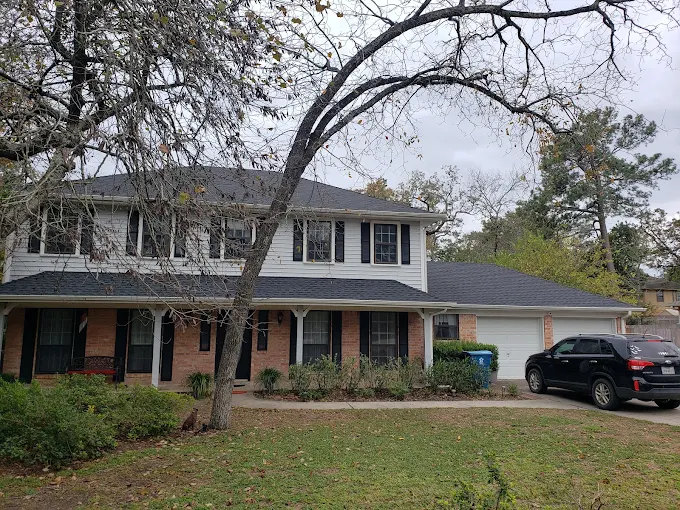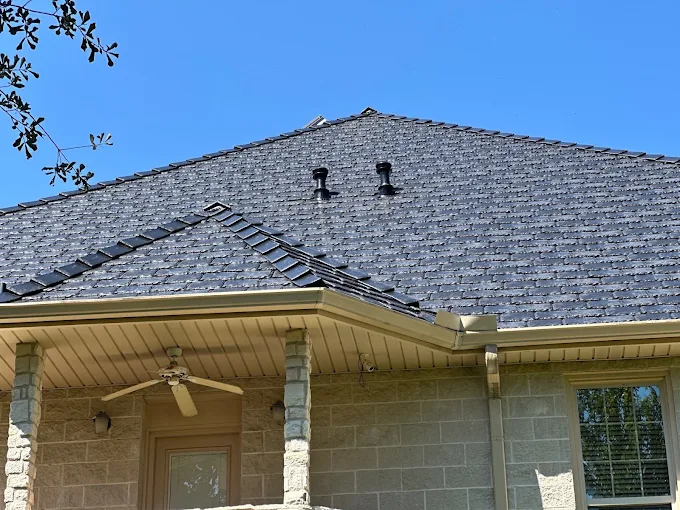
You look up and see long dark stripes running down the shingles. Maybe it’s on the north side, or the side under the trees. It looks like dirt or soot. It might even look like the roof is rotting.
Good news first: those black streaks are usually algae, not damage. Less good news: in some states, insurers have started noticing streaks in aerial photos. Here’s what Houston homeowners should know about both.
What Causes Black Streaks on a Roof?
Most dark streaks on asphalt shingles come from a type of blue-green algae called Gloeocapsa magma. The spores travel through the air and settle on roofs. They grow best in warm, humid weather, which describes Houston for most of the year.
The Asphalt Roofing Manufacturers Association explains that the dark color comes from pigments the algae makes. That’s why a light gray roof can slowly turn brown or black. Streaks often show up first on slopes that stay damp and shaded the longest.
Is it algae, moss, or something else?
- Long, even dark streaks that run downhill are usually algae.
- Green, fuzzy patches that hold water are moss. Moss is less common here but can lift shingle edges.
- Dark spots that look wet, plus missing granules, can mean worn shingles. That’s a wear problem, not a stain.
- Black marks right below a chimney or vent may be soot or rust runoff.
Why some roofs streak and others don’t
You might notice one house on your street with heavy stains while the house next door looks clean. A few things make the difference:
- Shade from big trees keeps the shingles damp longer
- Slopes that get less sun dry out more slowly after rain
- Light-colored shingles show stains sooner than dark ones
- Older shingles may not have algae-fighting granules at all
Since the spores travel by air, once one roof on a block has algae, nearby roofs often follow. That’s also why cleaning one roof rarely keeps it clean for long.
Are Black Streaks Bad for Your Roof?
On their own, algae streaks are mostly a looks problem. They don’t punch holes in your roof. But they’re not always harmless. Streaks hold moisture against the shingles, and a dark roof soaks up more heat. Over many years, that can add wear.
The bigger risk is what the streaks can hide. A stained roof makes it harder to spot real problems, like lifted shingles or granule loss. That’s one more reason a yearly look makes sense. Our roof maintenance visits check the whole system, not just the color.
Why Some Insurers Now Notice Roof Streaks
This is the part most roofing blogs miss. Many insurers now use aerial and drone images to judge roofs at renewal time. In several states, homeowners have reported getting nonrenewal notices after aerial photos showed only streaks or discoloration.
Some regulators have pushed back. The Connecticut Insurance Department told insurers that cosmetic streaking and discoloration alone don’t support a nonrenewal. Regulators in Vermont and Pennsylvania have said similar things. Rules vary by state, and Texas insurers follow Texas rules.
As a former adjuster, here’s my take. You can’t control what a plane photographs. You can control what’s on file when your insurer asks questions. If you get a letter about your roof’s condition:
- Ask your insurer for the photos and the specific reason in writing.
- Get a professional roof inspection with dated photos.
- If the roof is sound, ask for a written roof condition letter you can send your insurer.
- Fix real problems quickly, so the file shows a well-kept roof.
We provide written roof condition letters homeowners can share with their insurer. Our guide on how to keep homeowners insurance with an old roof in Texas explains how those letters work.
How to Clean Roof Algae Safely
Please don’t pressure wash your roof. High pressure blasts off the granules that protect shingles from the sun. Shingle makers warn against it, and it can shorten the life of your roof.
The ARMA bulletin says a diluted bleach solution can lighten algae. It also warns that the roof gets slick and the results don’t last. Working on a wet roof is dangerous, so leave this one to a pro. STX Roofing offers roof soft washing, a low-pressure cleaning that removes stains without blasting off granules.
Some homeowners add zinc or copper strips near the ridge. Rain washes small amounts of metal down the roof, which slows algae growth. It works best as prevention, not a cure for heavy staining.
What to Do This Week
- Take a few photos of the streaks from the ground, so you have a dated record.
- Look for other problems in the same spots, like lifted shingles or bare patches.
- Check your gutters for heavy granule buildup. That points to wear, not just stains.
- If your insurer has sent a letter about roof condition, call your agent and ask for details in writing.
- Schedule an inspection before you spend money on cleaning or a new roof.
The Long-Term Fix: Algae-Resistant Shingles
If you’re replacing your roof anyway, choose shingles built to fight algae. These shingles use granules with copper that release slowly over time.
We’re a GAF Master Elite contractor, and we install Timberline HDZ shingles. GAF backs Timberline HDZ with a 25-year StainGuard Plus algae protection limited warranty against blue-green algae discoloration. GAF notes the warranty applies only to shingles sold in packages with the StainGuard Plus logo, so we confirm that when we order.
Not sure whether you need a cleaning or a new roof? Our guide to the signs you need a new roof can help you sort it out.
Frequently Asked Questions
Are black streaks on my roof covered by insurance?
Usually not. Insurance is built for sudden damage, like wind or hail. Algae grows slowly and falls under upkeep. Check your policy or ask your agent to be sure.
Can black streaks get my homeowners insurance dropped?
Insurers in some states have cited streaks seen in aerial photos. Some regulators say streaks alone aren’t enough. If you get a notice, ask for the images and get an inspection and condition letter.
Do zinc or copper strips really work?
They can slow new growth. Rain carries traces of metal down the roof. They’re best as prevention and won’t erase heavy stains on their own.
Will a new roof get rid of streaks for good?
A new roof with algae-resistant shingles gives you the best odds. Those shingles slow algae for years, but shade and moisture still matter. Keeping branches trimmed back helps the roof dry out.
Should I pressure wash my roof?
No. High pressure strips the protective granules off shingles and can shorten the roof’s life.
Do darker shingles hide algae?
They can make it harder to see. The algae is still there, though. Color choice is a style call, not an algae fix.
Do you inspect roofs in Kingwood and Atascocita for algae damage?
Yes. We inspect roofs across Kingwood, Atascocita, Humble, Huffman, and the Lake Houston area. Inspections are free, except for real estate transactions.
Get a Straight Answer About Your Roof
Streaks can be nothing, or they can hide something. Call STX Roofing at (281) 601-7663 for a free inspection. We’ll tell you whether it’s cosmetic, what it means for your insurance, and what, if anything, it’s worth doing.