
Roofing Contractor in Atasca Oaks Humble TX Serving Kings River Homes in Huffman
Veteran-owned roofing experts serving the Lake Houston area since 2016
How Newer Single-Family Homes Handle Storm Damage
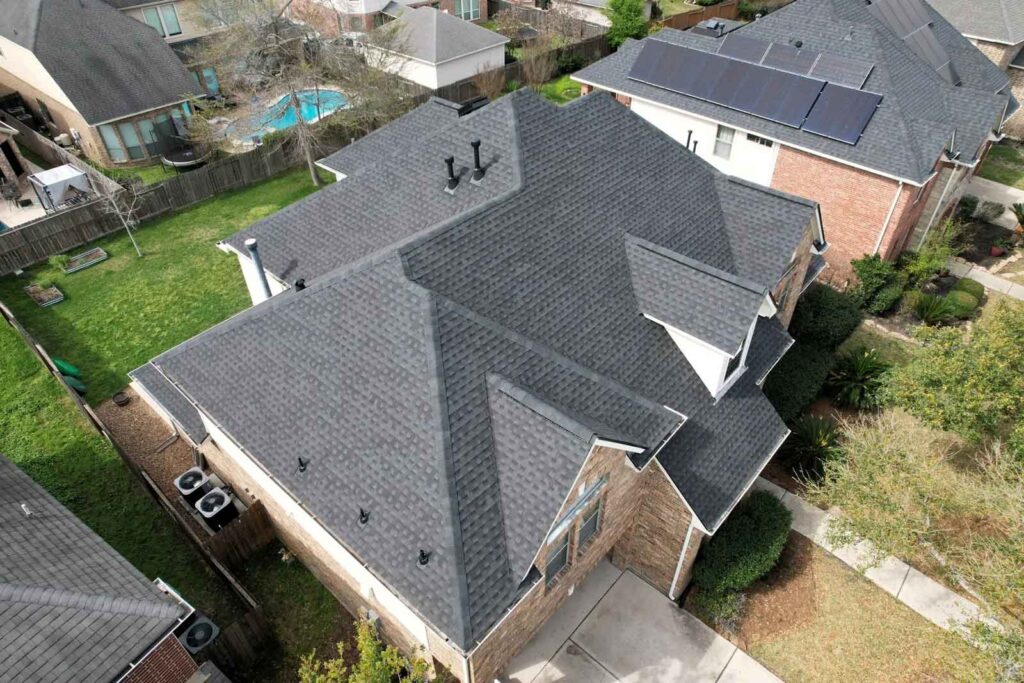
Atasca Oaks homes are almost entirely single-family, site-built houses on wooded half-acre-plus lots, and their steeper roof pitches and tree coverage create predictable storm damage patterns. The most common repair calls involve wind-lifted shingles after Gulf storm lines, tree-limb impacts, and algae streaking from shade and humidity, with full shingle replacement and flashing repair being the most frequent jobs.
Unlike apartment complexes or townhome clusters found closer to Highway 59, the housing in Atasca Oaks is made up almost entirely of single-family, site-built homes situated on wooded lots that often exceed half an acre. This lot size and building style matters when it comes to storm response. Larger lots mean more mature trees close to the roofline, and many of these homes were built in the last two decades with steeper roof pitches than older Huntsville-era ranch houses. A steeper pitch sheds water faster, which helps during heavy rain, but it also exposes more shingle surface area to direct hail impact and wind uplift during severe weather.
During spring and early summer, Gulf-fed storm lines frequently push through Huntsville and Huffman with fast-moving straight-line winds rather than sustained hurricane conditions. These bursts are often strong enough to lift shingle tabs along ridge lines and roof edges without doing obvious structural damage, which means homeowners sometimes do not notice a problem until the next heavy rain causes a leak in the attic or a ceiling stain appears. Because the subdivision sits among dense tree cover, falling limbs and even whole branches are a recurring source of punctures, cracked shingles, and damaged flashing around chimneys and vent stacks.
Wind-lifted or missing shingles along ridge caps and roof edges after fast-moving storm lines
Punctures, granule loss, and cracked shingles from tree-limb debris on wooded lots
Algae and moss streaking on north-facing slopes shaded by mature trees
Flashing separation around chimneys and skylights loosened by wind gusts
Gutter damage and clogging tied to heavy leaf and limb drop from surrounding trees
A common scenario in this neighborhood involves a homeowner near the subdivision entrance calling in after a spring storm line moves through Huffman, reporting a handful of shingles missing from one slope of the roof. In most cases, an inspection finds that the surrounding shingles have been weakened by wind uplift even where they have not detached, which means a patch repair alone would likely fail again in the next storm. The typical fix is either a targeted shingle replacement across the affected slope or, if the roof is already older, a full tear-off and replacement supported by a hail or wind damage insurance claim.
For homes shaded by heavy tree canopy, algae streaking is another frequent finding during storm-damage inspections, since humidity trapped under the canopy accelerates growth on shaded shingle surfaces. While not urgent on its own, it is often addressed alongside flashing and gutter repairs so the whole roof system is brought back to a consistent, weather-ready condition.
How Our Team Reaches the Kings River and Atasca Oaks Area
Our crews start every job in this part of Huffman the same way: loading trucks at our shop on FM 2100 Rd and heading directly into the neighborhood. From 25419 FM 2100 Rd, we travel north along FM 2100, which is the main corridor connecting our shop to these wooded subdivisions. Depending on the specific street, we either stay on FM 2100 until we reach the entrance roads for Kings River and Atasca Oaks, or we cut over on one of the connecting side roads that feed into the area. This route avoids unnecessary backtracking through central Huffman, which keeps our arrival windows tight and predictable for homeowners waiting on an inspection or repair.
Typical drive time from our shop to this part of Huffman runs about 10 to 15 minutes under normal conditions
FM 2100 traffic can slow things down during the 4 to 6 p.m. window, so afternoon appointments may run slightly longer
We factor in this stretch when scheduling same-day estimates or emergency tarp calls so crews are not rushing the last leg of the drive
Once we turn off FM 2100 and into the neighborhood itself, the character of the drive changes. These communities are known for larger wooded lots, mature pine and oak cover, and driveways that often stretch well back from the main road. That means our arrival process looks a little different here than it does on a tighter suburban street. Before a single ladder goes up, our crew does a quick walk of the property to check overhead tree clearance, since low-hanging branches near the roofline are common in this part of Huffman and can interfere with safe ladder placement or material staging.
Long driveways also mean our trucks sometimes need extra room to park and unload without blocking a homeowner’s own vehicle access, so we plan for that when we pull in. A number of homes in this cluster have gated entrances or private drive access, so we always confirm gate codes or entry instructions ahead of the scheduled visit. This small step avoids delays on the day of service and lets our crew move straight into the inspection or repair once we arrive, rather than waiting at a closed gate while the clock on a roofing job runs.
Knowing this route and these on-site details isn’t just operational trivia. It reflects how familiar we are with the day-to-day realities of working here, from the drive out on FM 2100 to the tree-lined driveways once we arrive.
What Makes Roofs in Kings River and Atasca Oaks Different
Kings River and Atasca Oaks are largely products of the 2000s and 2010s building boom, which means most roofs here are decades younger than those in older Huntsville-era subdivisions closer to Houston. That newer age works in homeowners’ favor when it comes to structural decking and underlayment quality, but it does not make these roofs immune to damage. Many homes were built under building codes that predated the current Texas Department of Insurance windstorm inspection standards, so asphalt shingle systems installed in this era often lack the enhanced nailing patterns or impact-resistant rating requirements found in newer construction. Combined with this area’s direct exposure to spring hail corridors moving up from the Gulf, that gap in code coverage means even relatively young roofs can show bruising, granule loss, or cracked shingles after a single severe storm.
The neighborhood character also shapes the kind of roofing work in demand. Both subdivisions are owner-occupied, single-family communities, unlike some other Huffman-area clusters that include rental duplexes or small multi-family lots. This means roofing crews here spend more time working directly with the homeowner making decisions about materials, warranties, and insurance claims, rather than coordinating with property managers or multiple leaseholders. It also means pride of ownership tends to run high, and homeowners are often more particular about matching shingle color, ridge cap style, and overall curb appeal to the rest of the street.
Because these subdivisions sit in unincorporated Harris County rather than inside Houston’s city limits, there is no municipal building department issuing roofing permits or performing city code inspections. Oversight instead falls to a combination of county requirements and, more directly, homeowners association guidelines. Many HOAs here maintain approved shingle color palettes and style restrictions to preserve a consistent look across the community. A qualified local contractor should already be familiar with these HOA submission requirements and can help homeowners avoid delays or denied applications during a re-roof.
Spring storm season (typically March through June) brings the highest hail and wind risk, making early-season roof inspections valuable before major systems roll through
Fall brings heavy leaf and pine debris from the wooded, tree-lined lots common in both neighborhoods, which can clog gutters and trap moisture against shingles
HOA architectural review often requires pre-approval of shingle color and style before installation begins
Lack of city permitting means homeowners should verify contractor licensing and insurance directly rather than relying on municipal inspection records
Understanding these local factors helps homeowners plan maintenance around the actual risks their roof faces rather than a generic seasonal schedule. A roof in Atasca Oaks shaded by mature oaks needs different gutter and debris attention than one in a more open section of Kings River exposed to direct hail impact, and a contractor familiar with both settings can tailor recommendations accordingly.
Frequently Asked Questions
Common questions about roofing contractor in Atasca Oaks Humble TX in Humble, TX
How fast can you get to my home near Kings River after a storm?
We usually reach Kings River and Atasca Oaks in about 10 to 15 minutes from our shop on FM 2100 Rd. Afternoon calls between 4 and 6 p.m. may run a bit longer due to FM 2100 traffic. We factor this into scheduling so your inspection isn’t rushed.
Why do Atasca Oaks roofs get damaged differently than older Huffman homes?
Atasca Oaks homes were mostly built in the 2000s and 2010s with steeper roof pitches than older Huntsville-era ranch houses. That steeper pitch sheds rain well but exposes more shingle surface to wind uplift and hail. Combined with heavy tree cover on these half-acre-plus lots, wind-lifted shingles and limb damage are the most common calls we get.
Do I need to do anything before your crew arrives at my Kings River property?
Yes, if you have a gated entrance or long private driveway, please share the gate code or entry instructions ahead of time. Many homes in this cluster have extended driveways and dense tree canopy, so our crew also checks overhead branch clearance before setting up ladders. This prep keeps your appointment on schedule.